
Pallet Jack, Stackers & Lifting Equipment Repairs and Servicing - Gauteng
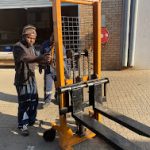
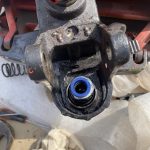
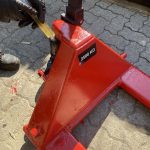
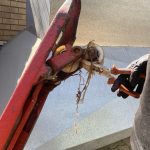
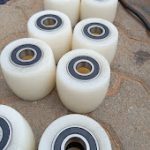
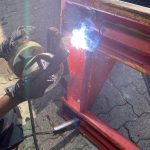
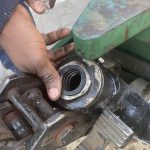
Trolley Clinic brings genuine mechanical and electrical engineering standards to pallet jack, stacker, and lifting equipment repairs – covering both hydraulic and electric systems. We service all makes, models and brands across the full range of material handling equipment, including pallet jacks, high-lift jacks, pallet stackers, scissor lift tables, vehicle jacks, and specialised low-profile fleet units. Our work covers hydraulic and electrical overhauls , structural repairs and rebuilds, and replacing seizes or damaged bearings and wheel.

Common Fault Points

Tap a dot on the picture, or a button below, to see that fault explained.
In-House Advantage: Custom Fabrication, Repairs & Upgrades for Lifting Equipment
Most pallet jack and lifting equipment repairers can only do one thing: replace a broken part with a new one – and if that part isn’t available, it has to be imported, often from China, with all the cost and delay that brings. Trolley Clinic is different. Using in-house CAD design, structural fabrication, laser-cut steel components, and in-house MIG, TIG, and arc welding, we can custom-manufacture an alternative replacement part on-site when the original isn’t available – and for precision-turned components, we work with a trusted network of local machine shops and turners to match OEM specifications perfectly.
That same in-house capability means we don’t just fix what’s broken – we can upgrade it. Whether the issue is hydraulic, structural, or electrical, we reinforce weak pivot points, redesign underperforming components, and improve on the original engineering, so your equipment comes back stronger and lasts longer than a standard repair would. Whether your team runs manual pallet jacks or any other hydraulic or electric lifting equipment, it returns to the floor structurally sound, safe, and ready for warehouse operations.
Frequently Asked Questions
We can do both! We offer on-site servicing for standard maintenance and quick fixes to get you moving right away. However, it depends entirely on the severity of the damage. If a unit has severe hydraulic issues or requires heavy structural welding, it will need to come to our Randburg workshop. To help keep your warehouse running, we can provide a temporary loan unit while we fix yours. Please note that our loan units are limited and subject to availability, so we arrange them on a first-come, first-served basis.
Yes. Because we utilise official technical diagrams to precisely match component sizes, we can source and fit the correct seals, wheels, and mechanical parts for almost all major makes and models of manual pallet jacks and lifting stackers.
This is a classic symptom of an internal hydraulic pressure loss. It usually means the rubber oil seals have worn out, a valve is jammed, or the fluid level has dropped. Because the system can’t trap the hydraulic fluid properly, it can’t build the pressure required to raise the forks. Stripping the pump down to replace the seals and refilling it with fresh fluid fixes this completely.
Yes! Very often, if a pallet jack was tilted, left on its side, or sat idle for a long time, an air bubble can get trapped inside the hydraulic valves (called an “air lock”). You can easily bleed the system yourself right on the warehouse floor:
Pull and hold the handle control lever all the way up into the “Lower” position.
While holding that lever up, pump the main handle up and down vigorously 10 to 15 times.
This forces the trapped air bubbles out of the pumping chamber and pushes the hydraulic oil back where it belongs. If you flip the lever back down to “Lift” and it still won’t pump up, then you know it is a genuine mechanical issue like a broken seal or a fluid leak that needs to come to our workshop.
We repair and maintain all major manual and electric pallet jack brands, including Toyota, Crown, Noblelift, Bishamon, and generic industrial models.
We supply and fit load rollers, steer wheels, and bogie wheels (also commonly referred to as boogie wheels or bogy wheels). Available in durable polyurethane or nylon to suit smooth warehouse floors or rough outdoor surfaces.
Yes! When we collect your unit for major workshop repairs or hydraulic overhauls, we can provide a temporary loan pallet jack (subject to availability) so your workflow never halts.
Absolutely. Since most commercial pallet jacks are imported mass-produced units, we frequently customise and structurally reinforce them to handle tough local warehouse environments. Using 3D CAD modeling and in-house steel fabrication, we can extend fork lengths, widen chassis bases, reinforce high-stress pivot points, and upgrade weak cast linkages to heavy-duty structural steel.